Head first.
Stepping up to the nice ticket lady at the Met:
Then, maybe it wants a payoff on the order of "a million moments of discovery. One of a kind."
Stepping up to the nice ticket lady at the Met:
“Which way to the Krasner/Pollock preview?”
“Up the stairs, take a left, then a right at the Rodin. Can’t miss it.”
And just like that, an unlooked-for head-knock, a momentary muse about why museums aren't using exhibits as navigational waypoints on their floor guides.
Wouldn’t that turn every visit into a treasure hunt?
In fact, maybe we don't stop with map-making and start thinking about turning traffic-guiding into something that builds more traffic.
After all, aren’t museums equally differentiated and distinguished by what they put on display?
Especially since, and I’m thinking of both Guggenheims, the Niterói, the British Museum, SF MOMA, and others of that stature, the building itself is part of the art.
For any Louvre fans in today’s reading audience:
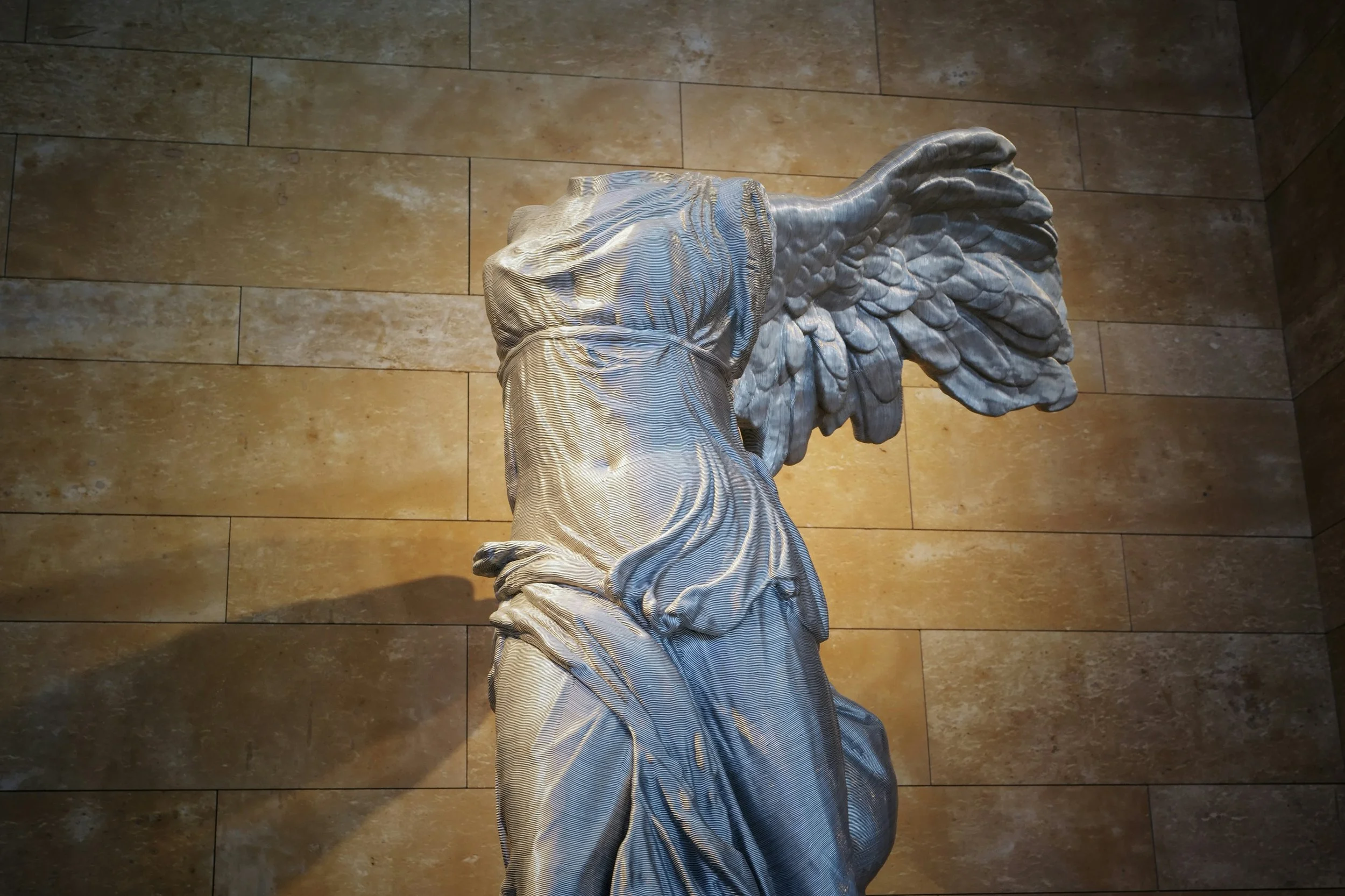
Directions to a Leonardo hiding in plain sight: Up the Daru staircase, left at Winged Victory, case the French Crown Jewels’ last known address, slip reverently past Cimabue’s Maestà, hang a hard left at Napoleon’s imperious marble columns, and start looking for an angel looking back at you. If it’s Mona Lisa, you’ve gone too far.
Then, maybe it wants a payoff on the order of "a million moments of discovery. One of a kind."
Okay, it wants something better. But that’s beside the point, which happens to be twofold.
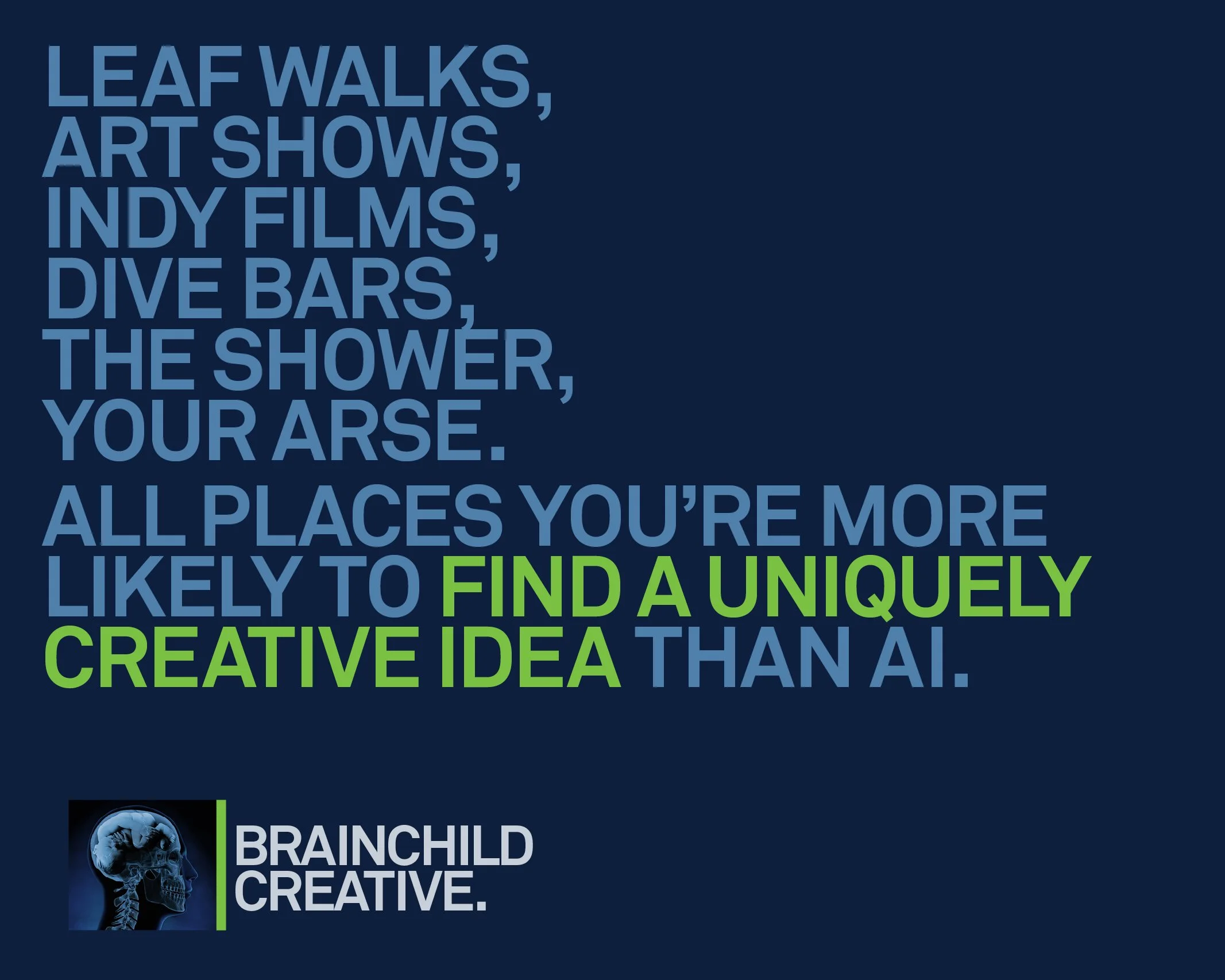
First, all that blather about what happens when you take walks, go to museums, trade the screen on your desk for one in a movie theater, or step into the shower isn’t blather at all.
In fact, the longer you work as a creative professional, the more you realize that filling your senses with other people’s ingenuity is infinitely more energizing than filling your nose with the fumes of your own desperation.
All because it fuels the most subtle and brilliant part of your idea-generating machinery: the background mind that doesn’t stop working on the problem just because you do.
Trust me on this, young Padawan. And do remember it comes with a double-triple-quadruple bonus — unlike knees, hips, and prostates, this is a faculty that becomes more reliable, useful, and delightfully surprising with age.
Which points me to point two:
AI doesn’t have this capability built in. At least, not yet.
It can tell you precisely where Rodin’s The Age of Bronze stands inside the Met. Full disclosure: it did exactly for me on this post.
But it doesn’t get lost in a novel thought on the way to a Krasner and Pollock love story.
It doesn’t tap you on the shoulder in the middle of a museum, or the middle of the night, with an idea you didn’t know you were looking for.
And it doesn’t draw on that most productive wellspring of human originality.
When the prompting stops, it doesn’t keep thinking