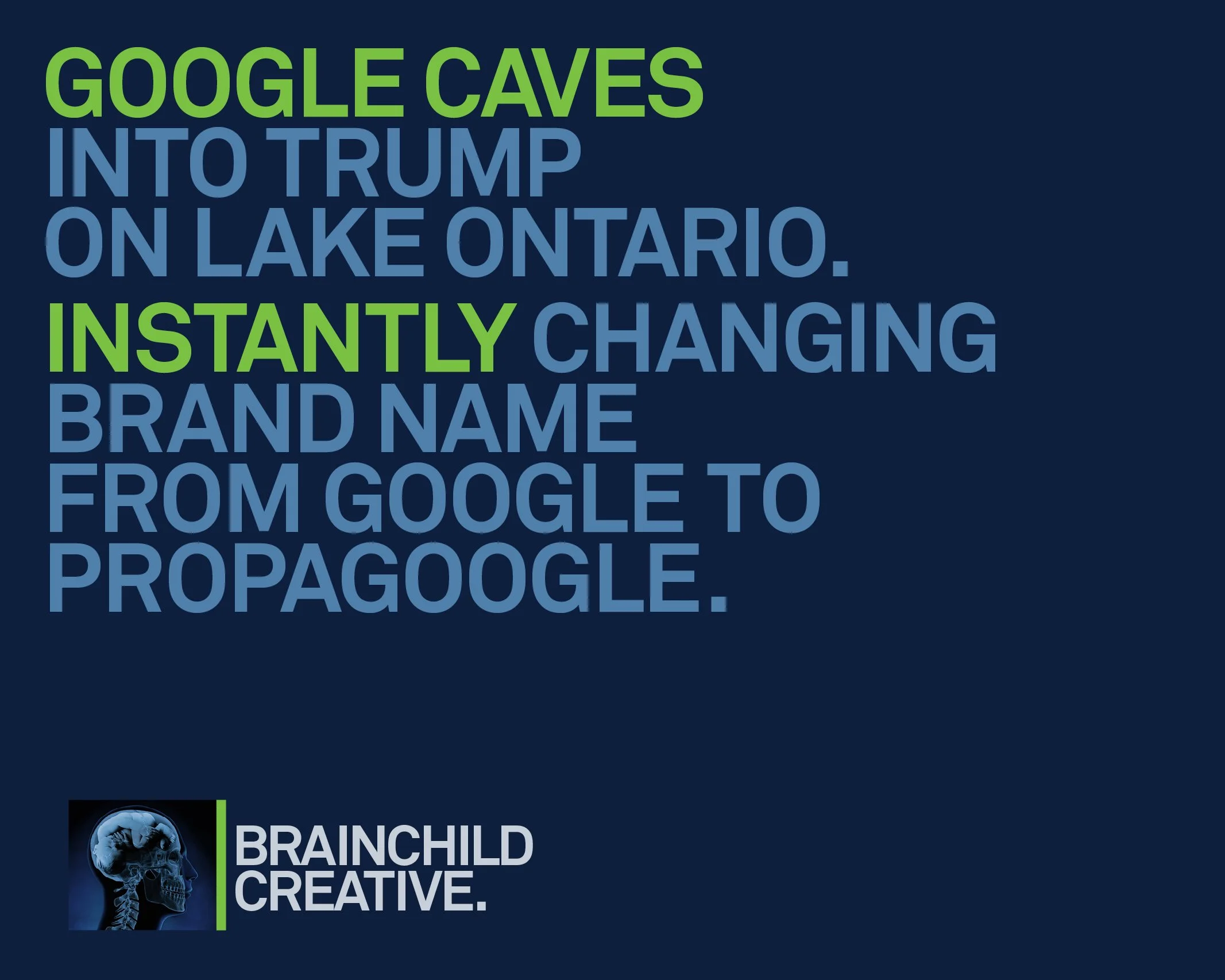
Propagoogle.

Maybe we start here:
“Most buying decisions aren’t made by comparing features line by line. People are trying to answer simpler questions in their head: What problem am I trying to solve? Who is this for? What happens if I choose this versus doing nothing?”
And that, in a cranial nutshell, is why brand storytelling is so important.
It isn’t about inventing crafty tales or crafting a pretty narrative, not about “slapping a dramatic video on a website,” or even hanging a shiny object on quals presentation.
It’s about providing structure to a universal thought process.
“Shaping belief before shaping action.”
Showing the audience you “get” who they are and what their world looks like to them.
Providing the promise that becomes the basis of trust.
Demonstrating, in the next chapter and the chapter after that, you can be believed.
In recent years, I totally get that “storytelling” has gotten a bad rap, overused to the point of trivialization.
What I don’t get is how many people around the adland table have concluded it’s a disposable cost item, rather than an entirely human essential.
My POV: they're missing the obvious.
For a perfect case in point, let's turn to Google leaping like a hungry trout to comply with the silly Trumpian fatwa relabeling Lake Ontario (“lake of shining waters”) as Lake America (guy named Vespucci’s first name).
Consider how that twists the brand story.
It turns a company built around universality, factuality, and objectivity into a suspect source of information.
It breaks faith with a story that’s been nearly four decades in the telling, and with everyone who bought into it.
That’s what people miss when they dismiss brand storytelling as narrative fluff.
Because a brand story is only partly owned by the company.
More decisively, it’s the framework people use to understand who you are, what you do, why you matter, and what they can expect from you.
Without that, an enterprise is just products, features, transactions, and blah-blah. With it, all that combines to deliver meaning.
It’s something that technology seems to have either forgotten or ignored. And, because of that, every time the industry missteps, à la Google, the collective consequences are that much greater.
See also the present state of the data center story.
Let's put it this way: Google’s strength was never search technology per se, but what search could deliver: an open, user-driven gateway that lets us understand the world as it is.
That's a brand story worth telling.
What we have now is a demonstration of what happens when you walk away, losing your own plot.
You have to love the local Noo Yawkah who asked, “What’s next, Canada geese becoming Donald ducks?”
If asked, I think that sly genius would have one word of advice for people who dismiss the importance of cogent and consistent brand storytelling.
Duck.