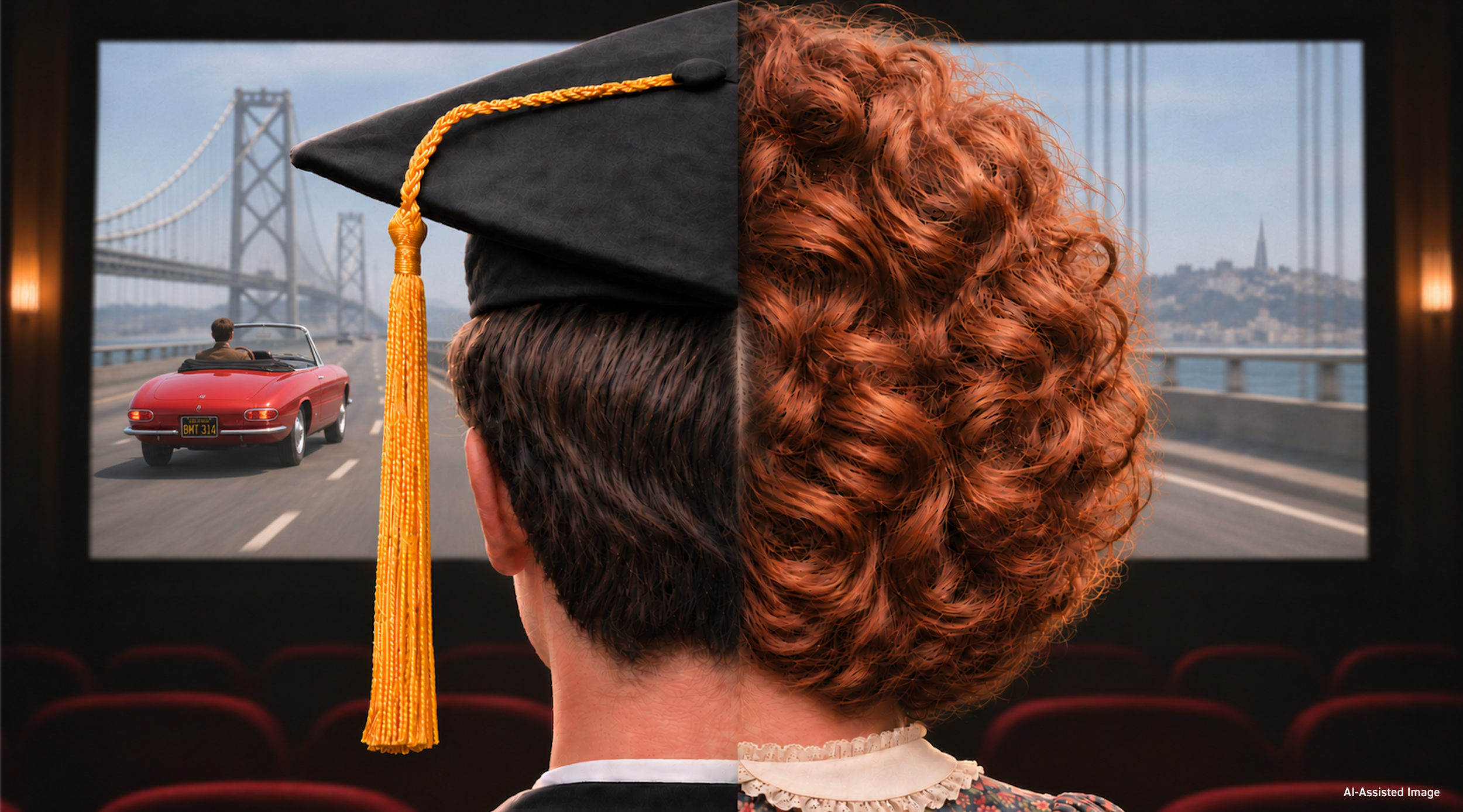
If you’re looking for inspiration, you might try spending an evening with an 89-year-old who can’t finish a story because he keeps interrupting it with another story.
And then another story after that.
Still, listening to Dustin Hoffman and his co-author, Ariel Levy, talk about his just-released memoir, Look At Me, has to rank among the most rewarding things I’ve done in, well, forever.
Oy, the uplift filled the packed temple sanctuary to the rafters, spilled out onto the street afterward, and walked us all the way home.
To be candid, putting the feeling into words isn’t easy, at least not without turning it into some kind of “20 years to become an overnight success” pablum. Which, in Hoffman’s case, meant a cold decade in New York, surviving by doing everything from cleaning toilets to working as the night attendant at a psychiatric hospital. Always doubting but never wavering in his desire to become a working actor.
And here we are, you and I, freaking out over a few slow days at work when the phone doesn’t ring.
But where it really connected for me, where I think all of us who aspire to a creative life can really connect, was when he started talking about the work.
About the value of going through life, listening to life: “I was at a Chinese restaurant when the woman at the table next to me told her dining companion, ‘It’s not the egg foo young, Harry, it’s the last thirty years.”
About the utterly absorbing nature of creativity: “Anybody who loves their work, the clock does not exist.”
About the permission to be passionate: “If you think you know the best way forward for a creative endeavor, you fight for what you believe in.”
About the inevitability of impostor syndrome: “In your heart of hearts, you always agree with the most negative reviews,” Mel Brooks has said, “because you know you’re a fake.”
And, most importantly, about the centrality of the work itself. “We couldn't get a job. We were character actors. We didn't expect to get work. We certainly didn't expect to get famous. We wanted to do good work. That's all we wanted.”
And, on that score, about the agelessness of wanting to keep creating: “What we all want is to continually grow and expand.”
Of course, there’s also his “I don't like the word reflect, because it feels like it's over” reason for not writing a memoir until he wrote one.
Which happened to come out the same year he narrated its nine-hour audiobook, appeared in three films, and booked a new role opposite Adam Sandler.
That would be this year. Not over, indeed.
Link to book: https://www.simonandschuster.com/books/Look-at-Me/Dustin-Hoffman/9781668200698